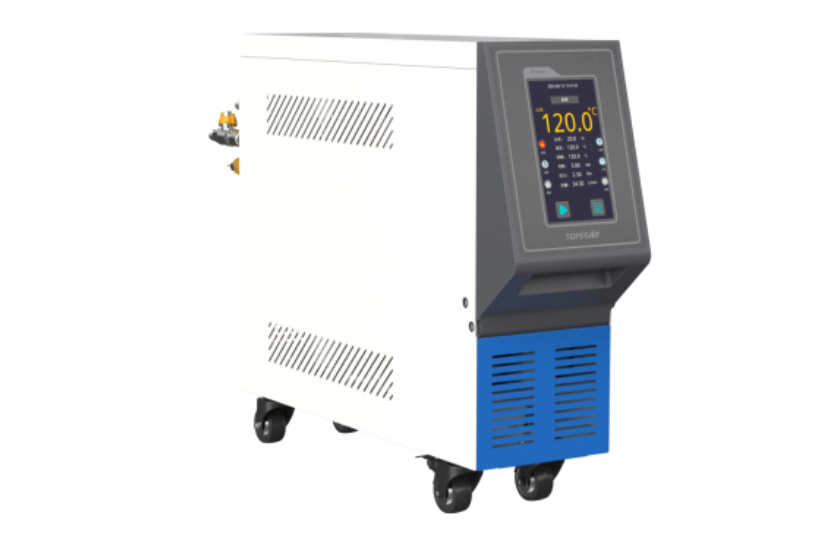
The Role of Mould Temperature Controllers in Achieving Precision and Consistency in Injection Molding
Injection molding is one of the most widely used manufacturing processes in modern industry, enabling the mass production of plastic components with complex geometries, tight tolerances, and consistent quality. From automotive parts and medical devices to consumer electronics and packaging, injection molding plays a critical role in delivering reliable products at scale. However, achieving true precision and consistency in injection molding is far from automatic. Among the many process variables involved, mould temperature control stands out as one of the most decisive factors.
A mould temperature controller is not merely an auxiliary device; it is a core component that directly influences product quality, cycle time, dimensional accuracy, surface finish, and overall production stability. This article explores the role of mould temperature controllers in injection molding, explaining how they contribute to precision and consistency, and why they are indispensable in modern manufacturing environments.
Understanding the Importance of Temperature in Injection Molding
Injection molding is fundamentally a thermal process. Plastic resin is heated until molten, injected into a mould cavity, cooled, and solidified into the final product. Throughout this cycle, temperature affects almost every physical behavior of the material, including viscosity, flow characteristics, crystallization, shrinkage, and internal stress.
While much attention is often given to barrel temperature and melt temperature, mould temperature is equally important. The mould determines how the molten plastic cools and solidifies, which in turn defines the final dimensions, surface quality, and mechanical properties of the part.
Unstable or poorly controlled mould temperatures can lead to a wide range of defects, including warpage, sink marks, short shots, weld lines, gloss inconsistency, and dimensional variation. In contrast, precise and consistent mould temperature control creates a stable thermal environment that allows the injection molding process to perform predictably and repeatably.
What Is a Mould Temperature Controller?
A mould temperature controller (MTC), also known as a mould temperature regulator, is a specialized device designed to heat and maintain the mould at a precise, preset temperature during the injection molding process. It circulates a heat transfer medium—typically water or oil—through channels within the mould to regulate temperature accurately.
Modern mould temperature controllers are equipped with advanced control systems, such as PID controllers, digital displays, and safety protections. These features allow manufacturers to maintain tight temperature tolerances, respond quickly to process fluctuations, and ensure stable operation over long production runs.
Depending on the application, mould temperature controllers can be categorized into water-type and oil-type units. Water-type controllers are commonly used for low to medium temperature ranges, while oil-type controllers are suitable for higher temperature requirements and applications demanding greater thermal stability.
The Role of Mould Temperature Controllers in Precision Molding
Precision in injection molding refers to the ability to produce parts that meet exact dimensional specifications, surface requirements, and functional criteria. Mould temperature controllers contribute to precision in several key ways.
Ensuring Uniform Cooling Across the Mould
One of the most critical roles of a mould temperature controller is to ensure uniform temperature distribution throughout the mould. Uneven cooling can cause differential shrinkage, leading to warpage and dimensional distortion.
By maintaining a consistent flow of temperature-controlled medium through all cooling channels, the controller minimizes temperature gradients within the mould. This uniform cooling allows the plastic part to solidify evenly, resulting in better dimensional accuracy and reduced internal stress.
Improving Dimensional Stability and Tolerance Control
Dimensional precision is especially important in industries such as automotive, electronics, and medical manufacturing, where components must fit together perfectly or meet strict regulatory standards.
Precise mould temperature control reduces variations in part shrinkage from cycle to cycle. When the mould temperature remains stable, the cooling rate of the plastic is predictable, leading to consistent part dimensions. This stability is essential for maintaining tight tolerances over large production volumes.
Enhancing Surface Quality and Aesthetic Appearance
Surface defects such as flow marks, weld lines, and uneven gloss are often related to improper mould temperature. If the mould is too cold, the molten plastic may freeze prematurely upon contact with the cavity surface, preventing proper flow and replication of fine details.
A mould temperature controller ensures that the mould surface is maintained at the optimal temperature for the specific material being used. This results in smoother surfaces, sharper details, and improved overall appearance, which is particularly important for consumer-facing products.
Achieving Consistency Through Stable Thermal Control
Consistency in injection molding refers to the ability to produce identical parts repeatedly, regardless of production duration or external conditions. Mould temperature controllers are essential for achieving this level of repeatability.
Reducing Process Variability
Injection molding processes are sensitive to environmental changes, such as fluctuations in ambient temperature or cooling water supply. Without proper control, these external factors can introduce variability into the process.
A mould temperature controller acts as a buffer against such fluctuations by actively regulating the mould temperature. This reduces process variability and ensures that each production cycle operates under the same thermal conditions.
Supporting Long Production Runs
In high-volume manufacturing, consistency over long production runs is critical. As production continues, moulds can gradually accumulate heat, leading to temperature drift and quality issues.
Advanced mould temperature controllers continuously monitor and adjust the temperature, preventing drift and maintaining consistent conditions throughout extended production cycles. This capability is vital for mass production environments where downtime and scrap must be minimized.
Enabling Repeatable Process Settings
Consistency is also essential when restarting production after downtime or changing moulds. With a reliable mould temperature controller, operators can quickly return the mould to the exact temperature used previously, ensuring that product quality remains consistent from batch to batch.
The Impact on Cycle Time and Productivity
While precision and consistency are primary goals, mould temperature controllers also have a significant impact on productivity.
Optimized mould temperatures can reduce cooling time, which is often the longest phase of the injection molding cycle. By controlling the cooling process more efficiently, manufacturers can shorten cycle times without compromising quality.
Shorter cycle times lead to higher output, better machine utilization, and lower production costs per part. In competitive manufacturing environments, these efficiency gains can provide a substantial advantage.
Material-Specific Temperature Control Requirements
Different plastic materials have different thermal characteristics, and mould temperature controllers allow manufacturers to tailor temperature settings to each material.
Amorphous Plastics
Materials such as ABS, PS, and PMMA generally require lower mould temperatures and are less sensitive to cooling rates. However, precise control is still important to prevent surface defects and ensure dimensional stability.
Semi-Crystalline Plastics
Materials such as PP, PE, PA, and POM are more sensitive to mould temperature due to their crystallization behavior. Improper temperature control can lead to inconsistent crystallinity, affecting mechanical properties and shrinkage.
Mould temperature controllers play a critical role in managing the cooling profile of semi-crystalline plastics, ensuring consistent material structure and performance.
Advanced Features of Modern Mould Temperature Controllers
Modern mould temperature controllers are far more sophisticated than earlier generations, offering features that further enhance precision and consistency.
PID Control Systems
PID control algorithms allow the controller to respond quickly and accurately to temperature deviations, minimizing overshoot and maintaining stable conditions.
Digital Monitoring and Alarms
Real-time temperature monitoring, alarms, and fault detection help operators identify issues before they affect product quality. These features also improve safety and reduce the risk of equipment damage.
Integration with Automation Systems
Many mould temperature controllers can be integrated with injection molding machines and factory automation systems. This integration enables centralized monitoring, data collection, and process optimization, supporting Industry 4.0 initiatives.
The Strategic Value of Mould Temperature Control in Modern Manufacturing
Beyond technical performance, mould temperature controllers provide strategic value by improving overall manufacturing reliability. Reduced scrap rates, fewer defects, and stable production processes translate into lower costs and higher customer satisfaction.
In industries where quality standards are increasingly strict, the ability to demonstrate process control and repeatability is a competitive advantage. A well-chosen mould temperature controller helps manufacturers meet these expectations consistently.
successful injection molding operations
Precision and consistency are the foundation of successful injection molding operations, and mould temperature controllers play a central role in achieving both. By ensuring uniform cooling, stable thermal conditions, and precise temperature regulation, these devices directly influence product quality, dimensional accuracy, surface finish, and production efficiency.
As injection molding applications become more demanding and materials more advanced, the importance of accurate mould temperature control continues to grow. Investing in reliable, well-designed mould temperature controllers is not merely a technical choice but a strategic decision that supports long-term manufacturing excellence.
For manufacturers seeking to improve precision, reduce variability, and maintain consistent quality across production cycles, mould temperature controllers are an indispensable part of the injection molding process.
Keep an eye for more latest news & updates on Techsslash!