Best Home Security Upgrades: Smart Cameras, Video Doorbells, Motion Sensors, Alarm Systems, Installation Costs, Reviews, and Buying Guide
Home security has changed dramatically over the last few years. Instead of relying only on locks and traditional alarm systems, homeowners now have access to smart cameras, intelligent video doorbells, wireless motion sensors, and connected alarm systems that can be monitored from anywhere using a smartphone.
Whether you’re protecting a family home, apartment, vacation property, or rental, investing in the right security upgrades can reduce the risk of theft, improve peace of mind, and even lower homeowners insurance premiums in some cases.
Why Home Security Upgrades Matter
Modern security systems do much more than sound an alarm during a break-in. They can:
- Monitor your property 24/7
- Send instant alerts to your phone
- Record suspicious activity
- Deter package thieves
- Allow you to see visitors remotely
- Integrate with smart home devices
- Provide evidence if a crime occurs
Many criminals avoid homes with visible security cameras and alarm signs because they’re more likely to get caught.
Instead of installing one expensive system all at once, many homeowners start with one or two devices and gradually expand their security network.
Smart Security Cameras
Smart cameras are among the most valuable home security upgrades available today. They allow you to monitor your property in real time and review recorded footage whenever necessary.
Indoor Cameras
Indoor cameras help monitor:
- Children
- Elderly family members
- Pets
- Entryways
- Living rooms
Many models include:
- HD or 4K video
- Night vision
- Two-way audio
- Motion detection
- Mobile notifications
- Cloud or local storage
Indoor cameras are generally affordable and easy to install using Wi-Fi.
Outdoor Cameras
Outdoor cameras provide continuous monitoring of:
- Front doors
- Driveways
- Backyards
- Garages
- Side entrances
Important features include:
- Weather resistance
- Wide viewing angle
- Night vision
- Motion detection
- Spotlight
- Siren
- AI person detection
Battery-powered cameras eliminate wiring, while wired cameras provide uninterrupted power.
Video Doorbells
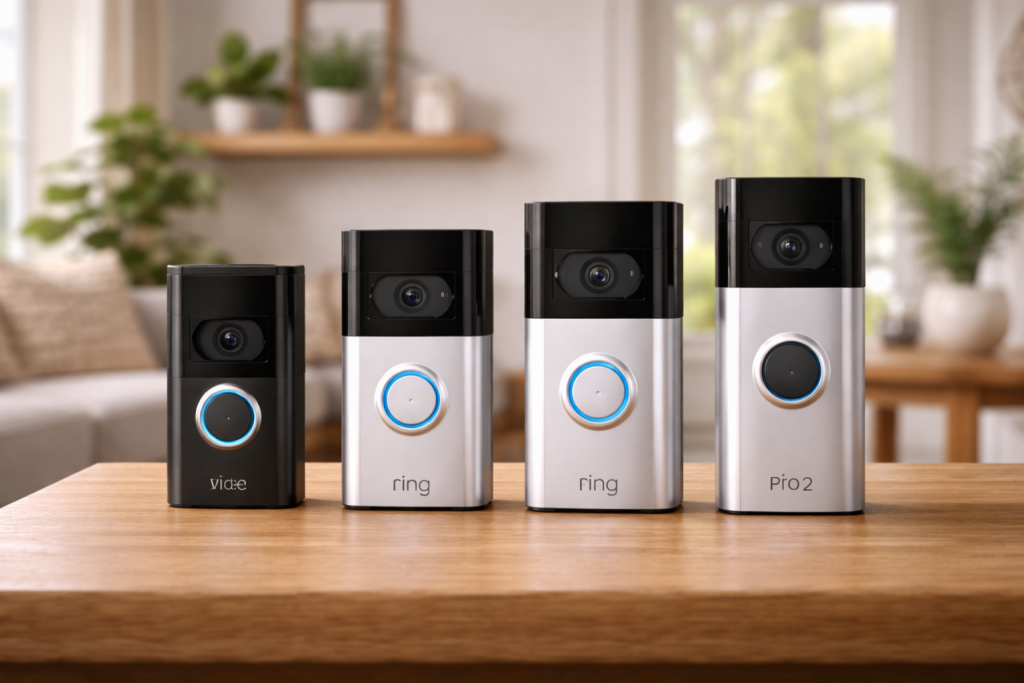
Video doorbells have become one of the most popular security upgrades because they let homeowners answer the door from anywhere.
When someone approaches your entrance, the doorbell sends a notification directly to your smartphone.
You can:
- Watch live video
- Speak with visitors
- Record deliveries
- Monitor package theft
- Screen unknown visitors
Many video doorbells also recognize people, packages, vehicles, and animals using AI technology.
Benefits
- Easy installation
- Increased front-door security
- Remote access
- Delivery monitoring
- Visitor recording
- Motion alerts
Video doorbells are especially useful for homeowners who travel frequently.
Motion Sensors
Motion sensors detect movement inside or outside your property.
When movement is detected, they can:
- Activate alarms
- Turn on security lights
- Trigger cameras
- Send smartphone alerts
Different sensor types include:
Passive Infrared (PIR)
The most common motion sensor.
Detects body heat and movement while reducing false alarms.
Microwave Sensors
Use microwave signals to detect movement.
Often used in commercial buildings because of their wider detection range.
Dual Technology Sensors
Combine PIR and microwave technology.
These provide higher accuracy and reduce false alarms caused by pets or weather.
Smart Alarm Systems
Alarm systems remain the foundation of home security.
Today’s smart alarm systems connect to your phone, allowing remote control from almost anywhere.
A complete alarm system may include:
- Base station
- Door sensors
- Window sensors
- Motion detectors
- Keypad
- Indoor siren
- Outdoor siren
- Smartphone app
Some systems also connect with:
- Smoke detectors
- Carbon monoxide detectors
- Water leak sensors
- Glass break sensors
- Smart locks
Door and Window Sensors
These sensors detect when doors or windows open unexpectedly.
If someone attempts unauthorized entry:
- Alarm activates
- Phone notification is sent
- Cameras begin recording
- Monitoring center may be contacted
Door sensors are inexpensive but highly effective.
Smart Locks
Replacing traditional locks with smart locks improves both convenience and security.
Features often include:
- Keyless entry
- Fingerprint access
- Smartphone unlocking
- Temporary guest codes
- Auto locking
- Activity history
Smart locks are ideal for:
- Vacation homes
- Airbnb rentals
- Families with children
- Elderly homeowners
Security Lighting
A well-lit property is less attractive to criminals.
Popular lighting upgrades include:
- Motion-activated floodlights
- LED pathway lighting
- Smart outdoor lighting
- Camera-integrated floodlights
Motion lighting startles intruders while making camera footage clearer at night.
Glass Break Sensors
Some burglars avoid opening doors or windows and instead break glass.
Glass break sensors detect the sound frequency of shattered glass.
They’re commonly installed near:
- Large windows
- Sliding doors
- Patio entrances
These sensors add another layer of protection.
Garage Security
Garages often contain expensive tools, bicycles, and vehicles.
Security upgrades include:
- Garage door sensors
- Smart garage door openers
- Security cameras
- Motion lighting
Smart garage systems notify homeowners if the garage door remains open.
Professional Monitoring vs Self Monitoring
Choosing between professional and self-monitoring depends on your budget and lifestyle.
Self Monitoring
Advantages:
- No monthly fees
- Instant phone alerts
- Complete control
- Lower overall cost
Disadvantages:
- You must respond yourself
- No emergency dispatch service
Professional Monitoring
Advantages:
- 24/7 monitoring
- Emergency response
- Police notification
- Fire monitoring
- Medical emergency options
Disadvantages:
- Monthly subscription
- Long-term costs
Many homeowners choose self-monitoring initially before upgrading to professional monitoring later.
Wired vs Wireless Security Systems
Both options offer strong protection.
Wired Systems
Pros
- Reliable connection
- No battery replacement
- Stable performance
Cons
- Professional installation
- Higher installation cost
- Less flexible
Wireless Systems
Pros
- Easy installation
- Expandable
- Portable
- DIY friendly
Cons
- Battery maintenance
- Wi-Fi dependency
Wireless systems have become the preferred option for most modern homes.
Installation Costs
Costs vary depending on equipment and installation.
Smart Camera Installation
DIY installation:
$0 to $50
Professional installation:
$100 to $300 per camera
Video Doorbell Installation
DIY:
Free if replacing an existing doorbell.
Professional:
$100 to $250
Motion Sensor Installation
DIY:
Minimal cost.
Professional:
$50 to $150 per sensor.
Alarm System Installation
DIY wireless kits:
$200 to $700
Professional systems:
$800 to $2,500 or more
Complete Home Security Installation
Small home:
$500 to $1,200
Medium home:
$1,200 to $2,500
Large home:
$2,500 to $5,000+
Prices depend on property size, wiring requirements, and the number of devices installed.
Best Home Security Brands
Several manufacturers consistently receive positive reviews from homeowners.
Ring
Strengths:
- Affordable
- Excellent video doorbells
- Large camera selection
- Easy setup
Best for homeowners seeking a simple DIY system.
Arlo
Known for:
- High-resolution cameras
- Excellent wireless options
- Strong night vision
- Premium video quality
Ideal for outdoor surveillance.
Google Nest
Offers:
- AI-powered alerts
- Smart home integration
- User-friendly app
- Excellent image quality
Works especially well for homes already using Google smart devices.
Blink
Popular because of:
- Long battery life
- Affordable pricing
- Easy installation
Good choice for budget-conscious buyers.
SimpliSafe
Provides:
- Flexible alarm systems
- Professional monitoring
- DIY installation
- Expandable equipment
Suitable for homeowners wanting a complete security solution.
ADT
Well known for:
- Professional installation
- Long industry history
- Comprehensive monitoring
- Advanced home security packages
Best suited for those wanting professionally managed security.
What to Look for Before Buying
Not every security device offers the same features.
Important factors include:
Video Quality
Choose at least 1080p resolution.
Higher resolution provides clearer faces and license plates.
Night Vision
Good night vision is essential because many break-ins occur after dark.
Infrared or color night vision performs best.
Field of View
Wider viewing angles reduce blind spots.
Look for cameras with at least a 130-degree viewing angle.
Weather Resistance
Outdoor devices should withstand:
- Rain
- Snow
- Heat
- Dust
Check the weatherproof rating before buying.
Cloud vs Local Storage
Cloud storage allows remote access but usually requires a subscription.
Local storage avoids monthly fees but may require memory cards or network storage.
Mobile App
A quality app should provide:
- Live viewing
- Notifications
- Recording playback
- Device management
- User permissions
An intuitive app greatly improves the overall experience.
Smart Home Compatibility
Consider compatibility with:
- Voice assistants
- Smart lighting
- Smart locks
- Home automation systems
Integration makes your security system more convenient.
Common Mistakes to Avoid
Many homeowners weaken their security without realizing it.
Avoid these common mistakes:
- Installing cameras too high
- Ignoring backyard entrances
- Using weak Wi-Fi passwords
- Forgetting firmware updates
- Leaving blind spots
- Not testing alarms regularly
- Ignoring battery replacement alerts
Routine maintenance keeps your system working properly.
Are DIY Security Systems Worth It?
For many homeowners, yes.
Modern DIY systems have become incredibly reliable and user-friendly.
Benefits include:
- Lower costs
- No installation appointment
- Expandable design
- Easy relocation
- No drilling in many cases
Professional installation still makes sense for large homes or complex security setups.
Building the Right Security System
Instead of purchasing everything at once, consider building your system in stages.
A practical starter package might include:
- One video doorbell
- Two outdoor cameras
- Door sensors
- Motion sensor
- Smart alarm hub
Later upgrades can include:
- Indoor cameras
- Smart locks
- Floodlight cameras
- Garage sensors
- Glass break detectors
- Professional monitoring
This approach spreads costs over time while steadily improving protection.
Final Buying Guide
The best home security upgrade isn’t necessarily the most expensive one. It’s the system that matches your home’s layout, your family’s needs, and your budget.
If you’re just getting started, a smart video doorbell and one or two outdoor cameras can significantly improve your home’s security. As your needs grow, adding motion sensors, smart locks, door and window sensors, and a connected alarm system creates multiple layers of protection that work together.
Before purchasing, compare installation costs, subscription fees, storage options, app quality, and smart home compatibility. Investing in reliable equipment from trusted brands often saves money in the long run by reducing maintenance issues and providing better performance.
A thoughtfully planned security system gives you more than protection from theft—it provides confidence that your home, family, and belongings are being watched over whether you’re inside, at work, or traveling. With today’s technology, creating a safer home has never been more accessible or more customizable.