How to Select the Right Concrete Sealer for Protecting Residential Floors and Outdoor Surfaces
The right concrete sealer depends on three things: where the concrete is, what you want it to look like, and what it has to survive. For most outdoor concrete — driveways, sidewalks, and pool decks in freeze-thaw climates — a penetrating silane-siloxane sealer is the best choice: invisible, breathable, and typically lasting seven to ten years. Choose a film-forming acrylic only when you want a wet look or colour enhancement on decorative concrete, and use an epoxy or polyaspartic coating, not a sealer, for garage floors that face hot tyres and chemicals. Match the product to the surface first, and the rest of the decision gets much easier.
Concrete looks indestructible, but it is porous, and water is its quiet enemy. Rain, de-icing salt, oil, and freeze-thaw cycles work their way into unsealed concrete, causing scaling, cracking, staining, and that white powdery bloom called efflorescence. A good sealer slows all of that down — but only if it is the right type, applied to properly prepared concrete, at the right time. This guide explains the sealer types, matches them to each surface in your home, and walks through preparation and application so the job lasts instead of peeling by spring.
Penetrating or Film-Forming: the First Choice That Decides Everything
Every concrete sealer falls into one of two families, and the choice between them shapes everything else. Penetrating sealers — silane, siloxane, and silane-siloxane blends — soak into the concrete and form a water-repellent barrier inside the pores while leaving the surface breathable and unchanged in appearance. Film-forming sealers — acrylics, epoxies, and polyurethanes — sit on top of the surface as a thin coating, adding gloss, colour depth, or abrasion resistance. Neither family is better in general; each wins on different surfaces.
The trade-off is simple. Penetrating sealers protect without changing how the concrete looks or feels, they do not peel because there is no film to peel, and they let trapped moisture escape. Their weakness is that they do not resist oil stains well and they cannot improve the appearance of dull concrete. Film-forming sealers transform the look of decorative concrete and resist abrasion and chemicals, but they wear down under traffic, can trap moisture if the slab is damp, and will peel or turn white if applied badly. If you remember only one rule, let it be this: outdoors and invisible, choose penetrating; decorative and glossy, choose film-forming.
What Does Each Concrete Sealer Type Actually Do?
Silane and siloxane are the workhorses of exterior protection. Silane penetrates deepest and suits dense, poured concrete such as driveways and bridges; siloxane works well on more porous surfaces such as block and pavers; blends of the two cover most residential jobs. Acrylic sealers are the go-to for decorative concrete: they dry fast, enhance colour, resist UV light, and are easy to reapply, though they wear faster under tyres and foot traffic. Epoxy creates a thick, hard, chemical-resistant film for indoor floors, but it yellows in sunlight, so it belongs indoors. Polyurethane sits between the two: tougher than acrylic, more UV-stable than epoxy, and a good choice for high-traffic floors.
Read the product data sheet before buying, and check two numbers in particular: coverage rate, usually given in square feet per gallon, and the VOC limit for your area. Coverage varies widely with the porosity of the concrete — a rough, thirsty slab drinks far more sealer than a smooth, dense one — so buy for your surface, not for the label’s best case. VOC rules also vary: the federal baseline is 600 grams per litre, but some states and regions set much lower limits, and solvent-based products may be restricted where you live.
Matching the Sealer to Driveways, Patios, Garages, and Pool Decks
Each surface in a home asks for something different, so match the sealer to the job rather than buying one product for everything. Driveways need freeze-thaw and salt resistance above all, patios need slip resistance and looks, garages need chemical and hot-tyre resistance, and pool decks need barefoot safety above everything else.
- Driveways and sidewalks: penetrating silane-siloxane, invisible and breathable, resists salt and freeze-thaw.
- Stamped and decorative patios: acrylic for colour enhancement, with non-slip grit mixed in.
- Pool decks: penetrating sealer, or acrylic with grit — never a smooth glossy film under bare feet.
- Garage floors: epoxy or polyaspartic coating, not a simple sealer, for hot tyres and chemicals.
- Basement floors: epoxy or polyurethane for abrasion resistance and easy cleaning.
- Polished indoor floors: a densifier plus a compatible topical sealer, matched to the finish.
Slip resistance deserves special attention wherever water and bare feet meet. Penetrating sealers do not change traction at all, which is why they are the safe default around pools. If you choose a glossy acrylic on a patio or pool deck, mix in a non-slip grit — most manufacturers allow up to around six ounces per gallon — and test a small area first. The tile industry’s ANSI A326.3 standard sets minimum wet slip-resistance values that give a useful yardstick, even though it was written for tile rather than sealed concrete.
How to Prepare Concrete Before Sealing: a Five-Step Routine
Preparation decides whether a sealer lasts years or peels in months, and it is the step most DIY jobs rush. New concrete must cure first — the usual waiting period is around 28 days — and moisture testing is more reliable than the calendar: if the slab is still damp, sealing traps water inside and the coating bubbles and peels. Old concrete needs cleaning, repair, and drying before a single drop of sealer goes on.
- Clean the surface with a masonry cleaner or degreaser, then pressure-wash and let it dry fully.
- Repair cracks and spalls with a concrete patching compound, and let repairs cure.
- Remove efflorescence, oil stains, and old sealer that is peeling or flaking.
- Test for moisture: tape a plastic sheet to the slab for a day and check for condensation underneath.
- Check the weather: seal only when temperatures and humidity sit inside the product’s stated range.
The plastic-sheet test is the cheapest insurance in the whole job. If moisture collects under the sheet, the slab is not ready, and no sealer — penetrating or film-forming — should go on yet. Wait for a dry spell, improve drainage around the slab, and test again. Rushing this step is the single most common cause of sealer failure, and it is entirely avoidable.
Applying Sealer Without Bubbles, Peeling, or White Haze
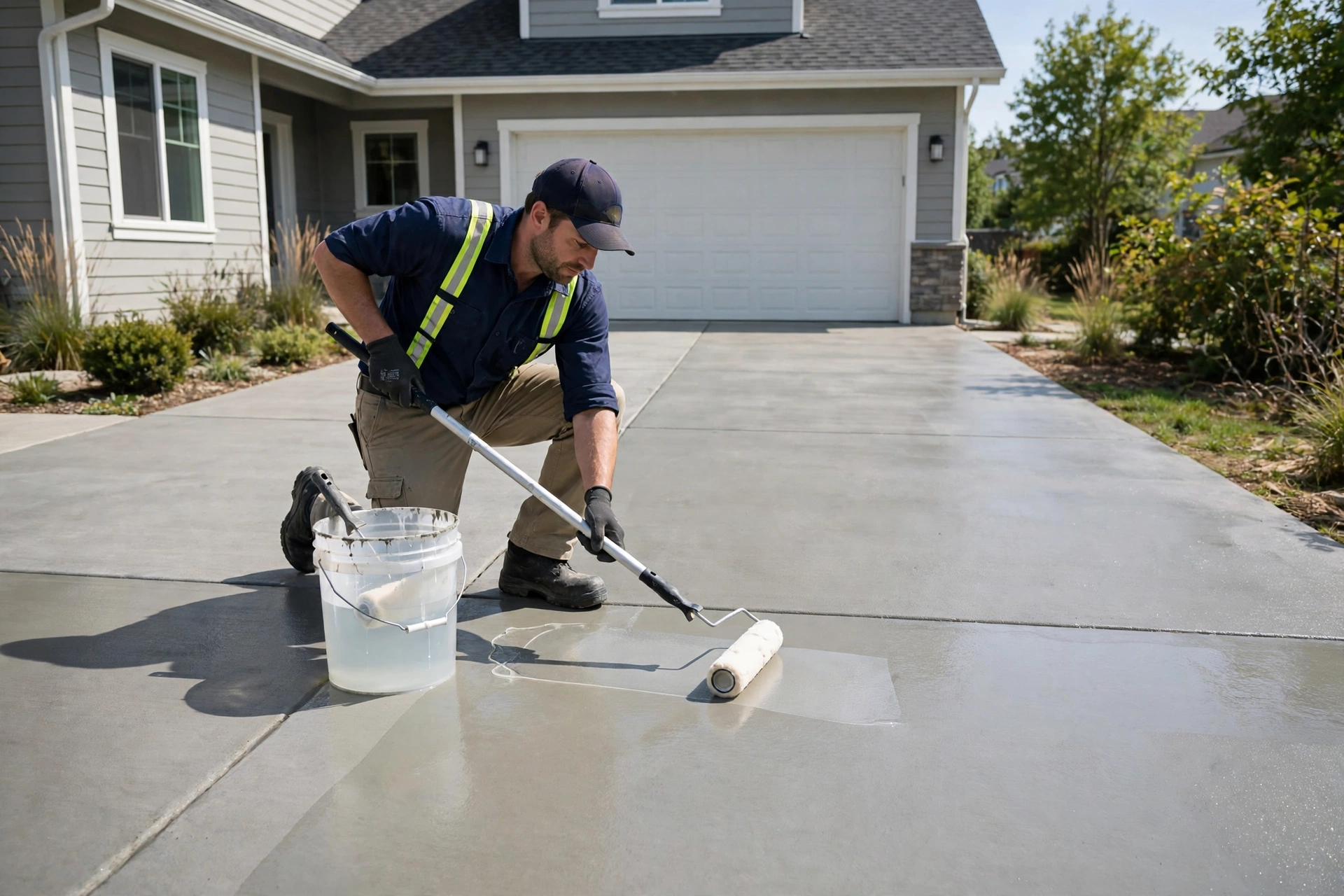
Apply sealer thinly and evenly, in the conditions the manufacturer specifies. A roller or pump sprayer works for most residential jobs; use a brush for edges and details. Two thin coats beat one thick coat, because thick coats trap solvent, bubble, and dry unevenly. Work in manageable sections, keep a wet edge, and do not walk back over a section that has started to set. For penetrating sealers, the surface should look damp but not pooled — puddles mean wasted product and a sticky finish.
White haze, or blushing, is the most common application problem with acrylics, and it usually means moisture was trapped under the film or the sealer was applied in high humidity or falling temperatures. Peeling has the same root causes, plus poor preparation and over-application. If haze appears, do not coat over it: let the surface dry fully, then follow the manufacturer’s guidance, which often involves a solvent wash or light re-coat. Keep foot traffic off the surface for at least a day and vehicles off for several days, or as the data sheet directs, and reseal on the schedule the product specifies rather than waiting for visible damage.
Slip Resistance, VOC Rules, and Indoor Safety With Concrete Sealers
Safety is part of selection, not an afterthought. Solvent-based sealers give off strong fumes: work outdoors or ventilate thoroughly, wear a respirator rated for organic vapours, and keep the product away from ignition sources. Water-based sealers are the safer choice indoors, with lower VOC content and minimal odour, and they are the right default for basements and living spaces. The EPA notes that indoor VOC concentrations can run far above outdoor levels during application, so open windows, run fans, and keep children and pets out until the coating has cured.
- Use water-based, low-VOC sealers indoors wherever possible.
- Wear gloves, eye protection, and a respirator with solvent-based products.
- Add non-slip grit to glossy sealers on patios, steps, and pool decks.
- Keep food-preparation surfaces to FDA-compliant, food-safe products.
- Check local VOC limits before buying — rules vary by state and region.
For kitchen counters and other food-contact concrete, choose only products rated food-safe once cured, and follow the manufacturer’s curing time exactly before using the surface. For garages, remember that a sealer is not a coating: if the floor sees hot tyres, oil, and chemicals daily, an epoxy or polyaspartic coating system is the right product, and a thin sealer will disappoint. When in doubt, ask the manufacturer — not the shelf label — whether the product is rated for your exact surface and exposure.
Concrete Sealer FAQs for Residential Floors and Outdoor Surfaces
How long does concrete sealer last on a driveway?
A penetrating silane-siloxane sealer on a driveway typically lasts seven to ten years. Acrylic sealers last one to three years and need recoating more often, especially under vehicle traffic.
Can I seal concrete that is still damp?
No. Sealing damp concrete traps moisture inside, which causes bubbling, peeling, and white haze. Let new concrete cure for around 28 days and use the plastic-sheet test to confirm the slab is dry.
What is the best sealer for a stamped concrete patio?
A film-forming acrylic is usually best for stamped concrete because it enhances the colour and pattern. Add non-slip grit for safety, and plan to recoat every one to three years.
Why did my concrete sealer turn white?
White haze usually means moisture was trapped under the film, or the sealer was applied in high humidity or cold conditions. Let it dry fully, then follow the manufacturer’s guidance for repair, which may involve a solvent wash.
Is epoxy sealer suitable for outdoor concrete?
Epoxy is not a good outdoor choice because it yellows in sunlight and can peel when moisture moves through the slab. Use it indoors for garages and basements, and choose a penetrating or polyurethane product outdoors.
Do I need a sealer on a garage floor?
A garage floor benefits more from an epoxy or polyaspartic coating than from a thin sealer, because hot tyres, oil, and chemicals demand a thick, chemical-resistant film. A simple sealer will wear quickly under those conditions.
Final Thoughts: Choosing a Concrete Sealer That Lasts
Choosing a concrete sealer is a matching exercise, not a brand contest. Penetrating sealers protect outdoor concrete invisibly for years; acrylics make decorative concrete look its best; epoxy and polyaspartic coatings handle the hard life of a garage floor. Prepare the slab properly, apply thin coats in the right weather, and reseal on schedule. Do those things and the sealer disappears into the background — which is exactly what a good sealer should do.